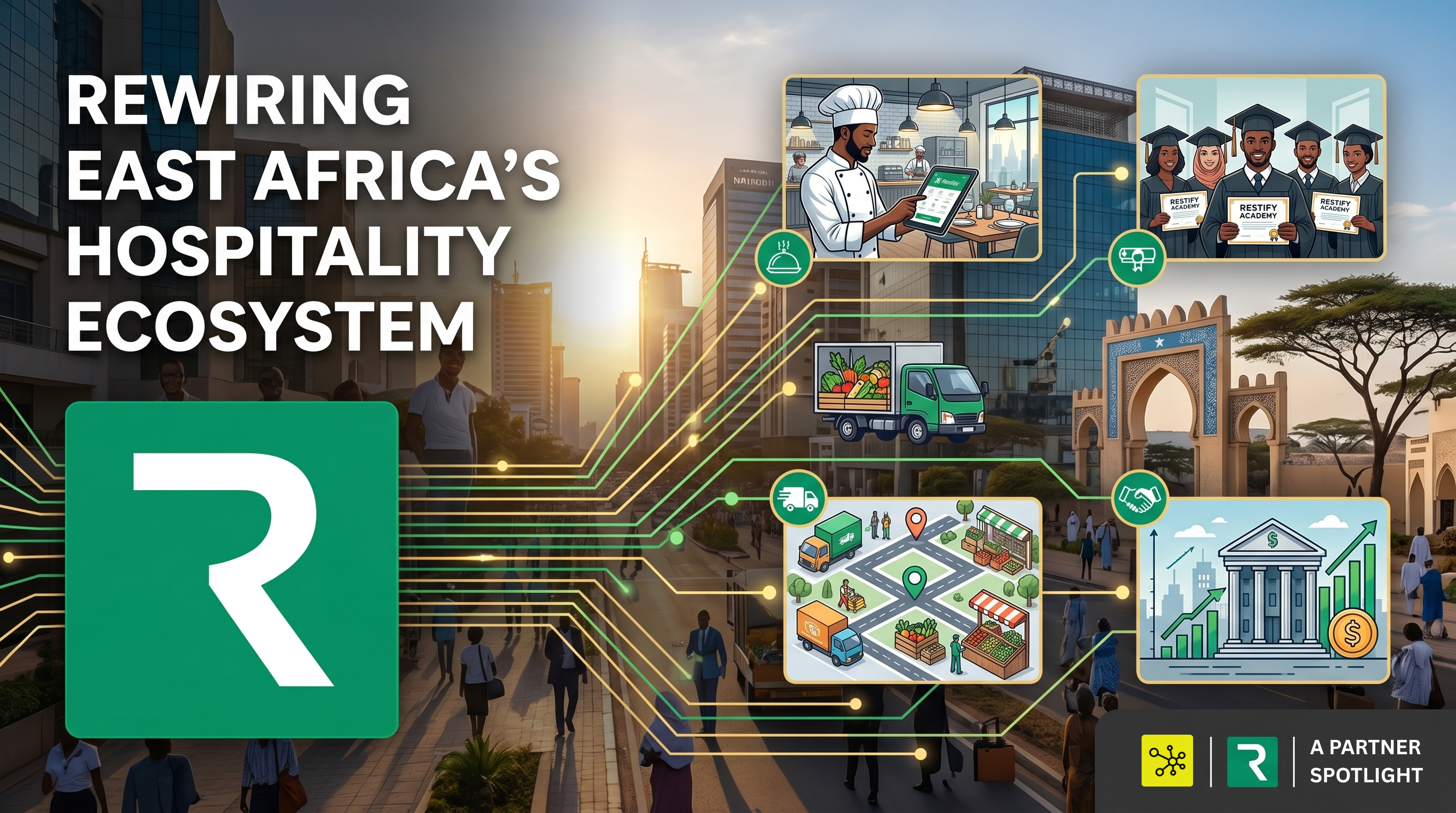
Beyond the POS: How Restify is Rewiring East Africa’s Hospitality Industry
Mon, 04 May 2026
Follow the stories of academics and their research expeditions

Mon, 26 Oct 2026
It is fair to say that rapid technological acceleration has
been on-going across Africa. It is also true that the computer age is everywhere
but in the productivity statistics. Governments digitized services, mobile
connectivity has leapfrogged infrastructure gaps, and automation, sensors, and
data platforms are increasingly present in factories, farms, hospitals, and
cities. Yet the lived reality remains unchanged. Productivity growth is slow,
essential services are overstretched, and critical infrastructure systems
remain fragile and reactive. The paradox is not that technology is absent; it
is that technology has not yet translated into system-level productivity,
resilience, and inclusive growth. Innovation has advanced faster than our
ability to integrate it into the physical and human systems that underpin
Africa’s development.
Decades after the paradox was first observed, it persists even
in the age of artificial intelligence. Today, Africa stands amid the most
powerful technological tools in history: AI, cloud computing, low-cost sensors,
robotics, and ubiquitous connectivity. Yet asset-heavy sectors such as
healthcare, water, energy, agriculture, and cities continue to struggle.
Hospitals generate vast amounts of data but face chronic staffing shortages and
uneven service delivery. Water utilities operate aging infrastructure through
fragmented systems. Energy grids lose power and revenue due to limited
visibility and coordination. Cities collect terabytes of data but lack the
capacity to act on it in real time. The constraint is no longer data or
innovation; it is integration — between digital systems, physical
infrastructure, and the people responsible for decision-making. Innovative Tech
Institutions such as Sand Technologies inspire T-Hub for Entrepreneurial Leadership
to facilitate this integration at scale.
Sustainable productivity emerges only when the physical,
digital, and human layers operate as one intelligent system. This is the
foundation of what we call Physical AI. Physical AI connects sensors in the
field, algorithms in the cloud, and human judgment on the ground. It turns data
into action and insight into impact. When digital twins evolve into operational
twins, systems no longer merely report problems; they anticipate and prevent
them. This is where productivity gains become real, measurable, and inclusive.
Africa’s essential systems represent trillions of dollars in
untapped economic and social value. Every one-percent improvement in efficiency
across healthcare, energy, water, and cities yields billions in savings and
profound human benefit. Bridging the physical-digital divide is therefore not
only an economic opportunity; it is a development imperative and a moral one.
When essential systems become predictive instead of opaque, and proactive
instead of reactive, Africa can leap from managing scarcity to enabling
sustainable, inclusive growth.
The great irony of the computer age was that it transformed
personal lives while leaving society’s essential systems largely untouched.
Africa does not need to repeat that history. With Physical AI, the impact of
technology becomes visible not just on screens, but in communities,
infrastructure performance, service delivery, and productivity statistics. Therefore,
our collective mission is: to make civilization’s critical systems as intelligent,
resilient, and human-centered as the technologies that surround them.
This piece builds on
an original version authored by Fred Swaniker, CEO of Sand Technologies, whose
insights helped shape the foundational narrative.
Disclaimer: T-Hub doesn't claim any credit for
this work. It is shared on our platform for purpose of information and knowledge.

0 Comments